

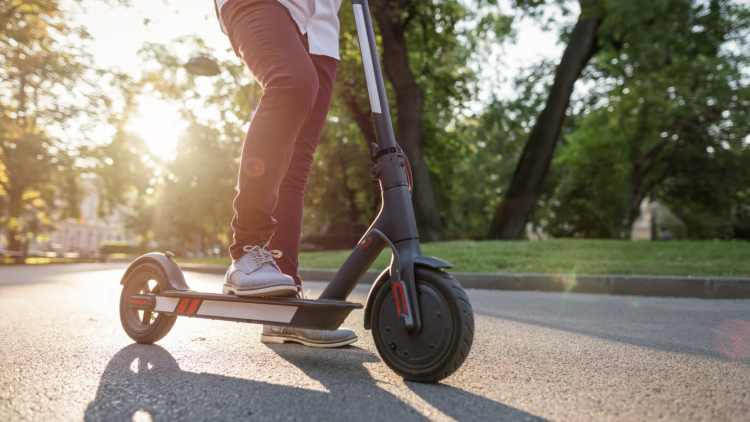
From commuting to school to meeting friends at the park, getting around can be a challenge when you’re not old enough to drive or don’t have access to a car. This is one reason why e-bikes and e-scooters are growing in popularity across Canada. Electric-powered vehicles offer a fun and convenient way to travel, but they also come with responsibilities. Before you hop on and hit the road, it’s important to understand both the benefits and the risks.
What Are E-Bikes and E-Scooters?
An e-bike is a bicycle with an electric motor that assists with pedalling, making it easier to ride long distances or up hills. An e-scooter is a stand-up scooter powered by a rechargeable battery, helping riders travel quickly with less physical effort. Both options can be useful alternatives to cars for short trips and everyday transportation.
What are the Benefits of E-Scooters and E-Bike Transportation?
- A Lower Carbon Footprint - Transportation is one of the largest sources of greenhouse gas emissions in Canada. Choosing an e-bike or e-scooter instead of a car for short trips can help reduce your environmental impact. Because they use electricity rather than gasoline, they produce far fewer emissions during use. When powered by clean electricity, they can be an even more sustainable transportation choice.
- They’re Great For Short Trips - If you need to get to school, your friend’s house, or a part-time job, e-bikes and e-scooters can help you travel quickly without relying on parents, public transit, or a car. They can be especially useful in urban areas, where traffic congestion slows larger vehicles.
- A Cost-Effective Alternative - Compared to owning and operating a car, e-bikes and e-scooters are generally more affordable. Charging a battery costs less than filling a gas tank, and maintenance costs are often lower as well.
- They Expand Mobility Options - For some young people, e-bikes and e-scooters provide greater independence. They make it easier to access activities, jobs, school and community spaces that may be too far to walk comfortably. Many events now provide valet bike parking to make it easier to park your bike or scooter.
(Liu, 2026; Pasquali, 2024).
How To Ride Safely
While there are many benefits to using e-bikes and e-scooters, they can pose safety risks if not used responsibly. Because they are much heavier than traditional bikes and can travel at 30-50km/hr, they require strength, coordination and experience to operate safely. Riders have little protection, increasing the likelihood of serious injuries even from minor collisions. E-bikes and e-scooters can be a great transportation option for teens and young adults, but younger children should wait until they're old enough and ready to ride safely. (Canadian Pediatric Society, 2025).
Unlike cars, they do not require a license, and each rider is responsible for ensuring they can share the road safely with cars, electric and non-electric bicycles and scooters, and pedestrians. Here are some tips for rider safety:
Wear a Helmet - A properly fitted helmet reduces the risk of head injuries.
Control your Speed - Ride at a speed that matches the conditions around you. Slow down near pedestrians and crowded areas.
- Use Lights and Bells - Using bells and lights ensures that you can properly see your surroundings while commuting, and that other drivers are aware of your presence on the road.
- Stay Alert - Pay attention to your surroundings and avoid distractions like texting, social media or listening to loud music while riding.
- Use Designated Riding Areas - Whenever possible, use bike lanes or other approved routes. Follow local regulations and traffic signs.
- Be Visible - Wear bright or reflective clothing, and use lights when riding in low-light conditions.
- Ride Solo - Most e-bikes and e-scooters are designed for one rider. Carrying passengers affects balance and increases the risk of crashes.
- Check your equipment before every ride - Before every ride, make sure your brakes, tires, lights and battery are in good working condition.
- Know when you’re ready - Age restrictions for use vary across Canada. In most places, youth must be 16 years old to operate; however, this can vary by province or municipality. While kids might be excited to hop on as soon as possible, these powerful machines are not toys, and there is a high risk of injury for younger children. Strong batteries mean that these vehicles are faster, heavier and more difficult to control than traditional bicycles and scooters. (Canadian Paediatric Society, 2025).
Know The Rules In Your Location
As the risks of this new technology continue to be studied, laws for operating e-bikes and e-scooters are still being developed across Canada, and there are currently no nationwide laws surrounding e-bikes and e-scooters. Minimum age requirements, helmet rules, speed limits and places you are allowed to ride can vary by province, territory or municipality. Some provinces have laws surrounding e-bike and e-scooter operation, while some leave it to municipal governments to determine their own regulations. Provincial laws might allow e-bike use at 12 years old, while your municipality may only allow it over 16. In that case, riders in your area would have to be at least 16 to ride. If your municipality has no regulations in place, you must follow provincial laws.
Example: Sarah from Alberta is 13 and wants to ride an e-bike around her neighbourhood. Alberta allows riders as young as 12 to operate a compliant power bicycle, provided they wear an approved helmet. Before riding, Sarah needs to check local bylaws or trail rules in her municipality. Before hitting the road by herself, Sarah should practice with an experienced rider to develop the skill and awareness required to ride safely and make sure she feels confident riding (Street Rides, 2026).
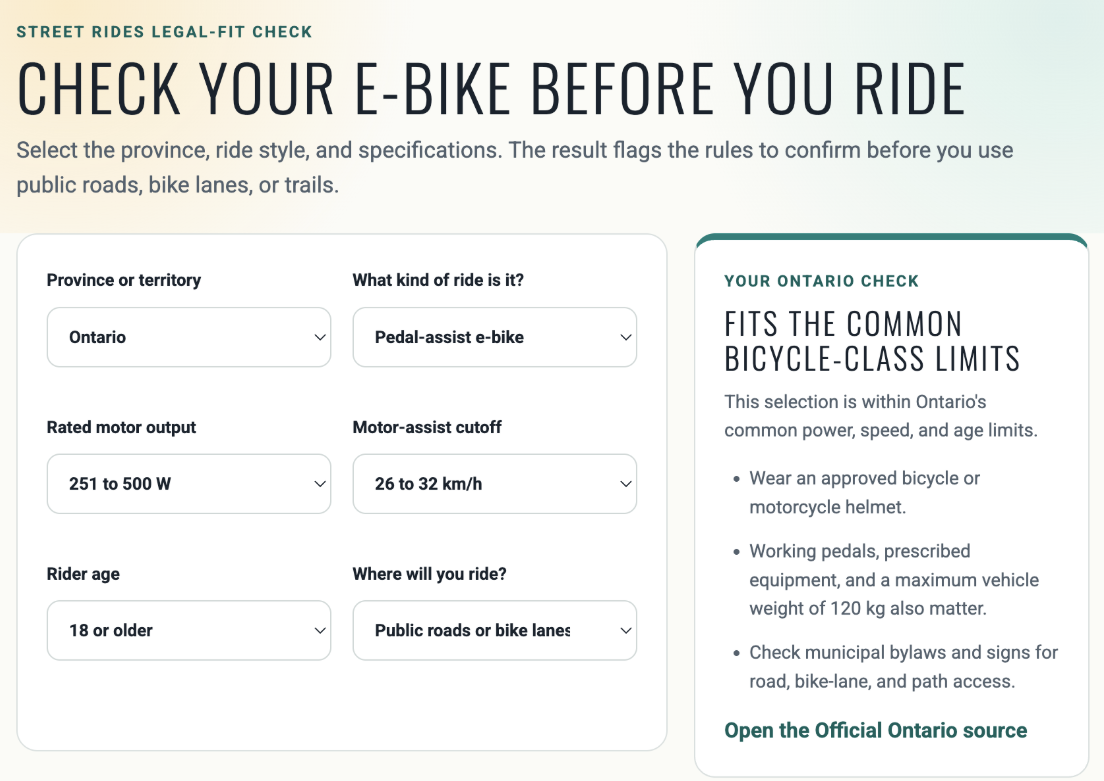
Street Rides Legal Fit Check can help you navigate provincial laws surrounding e-bike and e-scooter use by identifying common limits, age rules, and official sources to verify the rules based on the bike or scooter’s specifications. Link to Street Rides E-Bike laws in Canada.
Make Smart Transportation Choices
E-bikes and e-scooters can be exciting, affordable and environmentally friendly ways to travel, offering young people greater mobility and reducing transportation-related emissions. With that convenience comes the responsibility to ride safely, follow local regulations and respect others sharing the road.
Works Cited
- Liu, F. (2026, March 23). How electric bikes and scooters help reduce your carbon footprint in Canada. HIBOY. https://www.hiboy.ca/blogs/news/how-electric-bikes-and-scooters-help-reduce-your-carbon-footprint
- Pasquali, M. (2024). Benefits of the e-bike (Micro-Mobility Fact Sheet #3). Canadian Coalition for Green Health Care. https://greenhealthcare.ca/wp-content/uploads/2024/01/55-23-E-Bike-Benefits-Fact-Sheet-FINAL.pdf
- Apollo Scooters Canada. (2025, February 20). Electric scooter laws in Canada: What you need to know in 2026. Apollo Scooters Canada. https://apolloscooters.ca/blogs/news/electric-scooter-laws-in-canada
- Canadian Paediatric Society. (2024, August 15). E-scooter and e-bike warning. https://cps.ca/en/blog-blogue/e-scooter-and-e-bike-warning
- Canadian Paediatric Society. (2025). Electric scooters and bikes: Not safe for kids. Caring for Kids. https://caringforkids.cps.ca/handouts/safety-and-injury-prevention/electric-scooters-and-bikes
- Street Rides. (2026, April 28). E-bike laws in Canada 2026: Every province and territory explained. https://streetrides.ca/blogs/our-blog/ebike-laws-canada-provinces